Marine Fender Failure: Causes, Risks, and Prevention for Port Safety
During port docking operations, marine fender systems play a vital role in protecting vessels, berthing structures, and port facilities. However, even a well-designed system can fail when material quality, installation, or maintenance falls below the required standard.
Such damage can lead to serious consequences, including vessel contact damage, structural deterioration, operational delays, and unexpected repair costs. For this reason, port operators need to understand the causes of marine fender failure and take practical steps to prevent it.
This article examines common failure causes, real-world damage examples, associated safety risks, and effective prevention measures for port facilities.
1. Why Do Marine Fender Systems Fail?
Fender failure rarely results from a single factor. In many cases, several design, material, installation, and maintenance problems combine to reduce the system's performance.
1.1 Poor Material Quality
Rubber quality directly affects a fender's energy absorption, reaction force, and service life. Inferior compounds may harden, crack, or lose elasticity after prolonged exposure to seawater, sunlight, temperature changes, and repeated compression.
As a result, the unit may no longer provide the protection expected during vessel berthing.
1.2 Incorrect Fender Design and Selection
Every berth has specific vessel sizes, berthing energies, tidal conditions, and operational requirements. Selecting a fender without considering these factors can lead to excessive deformation or insufficient energy absorption.
Furthermore, unsuitable frontal panels or poorly designed connections may create uneven loads and increase the risk of local damage.
1.3 Improper Installation
Incorrect installation can significantly reduce the performance of an otherwise suitable fender system. Loose anchor bolts, inadequate foundations, misalignment, and incorrect clearances may cause abnormal stress during berthing.
Consequently, connections and supporting structures can deteriorate faster than expected.
1.4 Insufficient Inspection and Maintenance
Regular inspection helps identify cracks, deformation, corrosion, loose fasteners, and damaged panels before they become serious problems. Without a suitable maintenance plan, minor defects can develop into major failures.
In particular, concealed damage around fixing points may remain unnoticed until the system experiences another significant berthing impact.
2. Examples of Marine Fender Damage
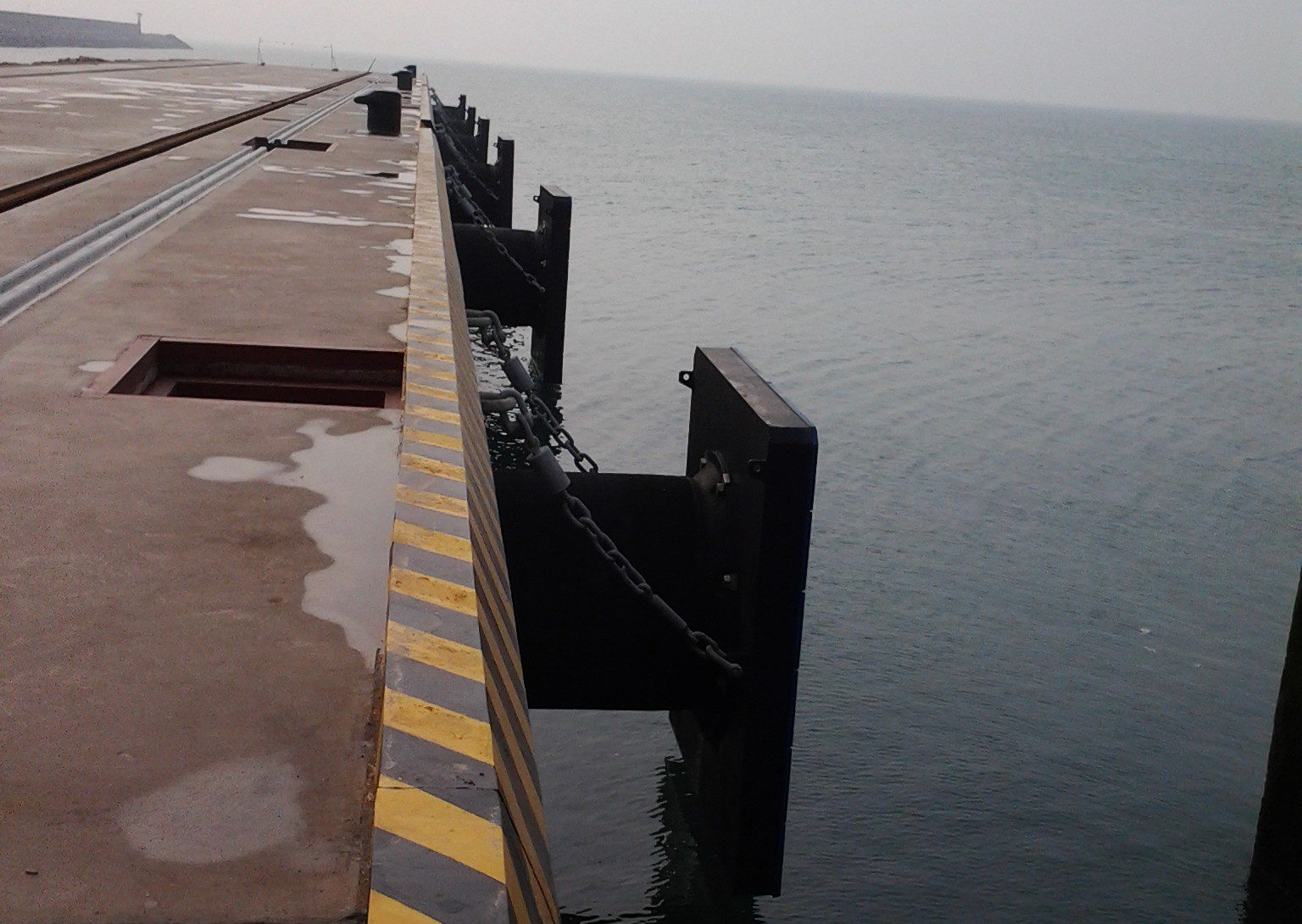
Actual damage cases demonstrate why regular inspection and timely replacement are important. The following examples show two common types of deterioration found in port fender systems.
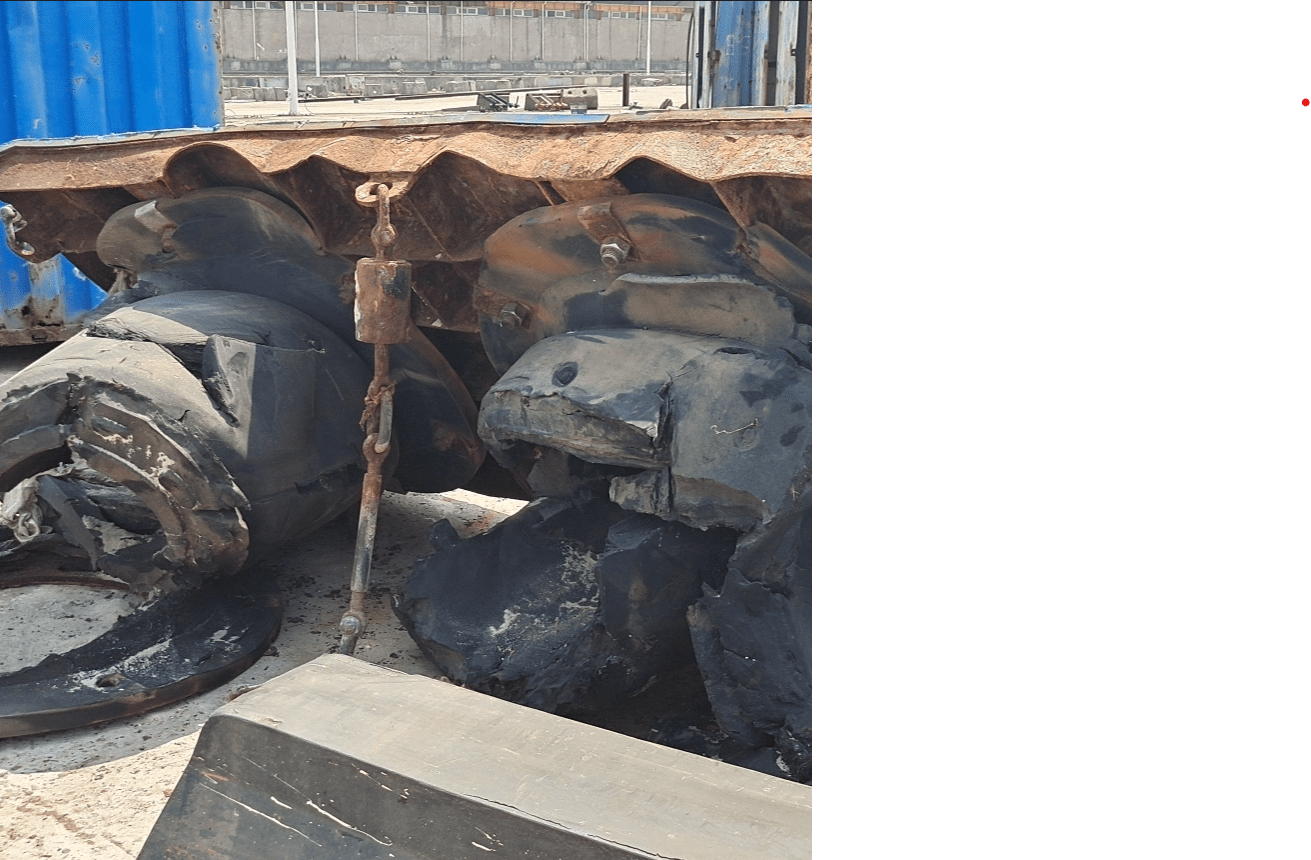
2.1 Damaged Rubber Fender
Rubber fenders may develop visible cracks, surface deterioration, and permanent deformation after prolonged service or repeated excessive loading.
Once the rubber body loses its original performance, its ability to absorb berthing energy may be reduced. Therefore, damaged units should be assessed and replaced when necessary.
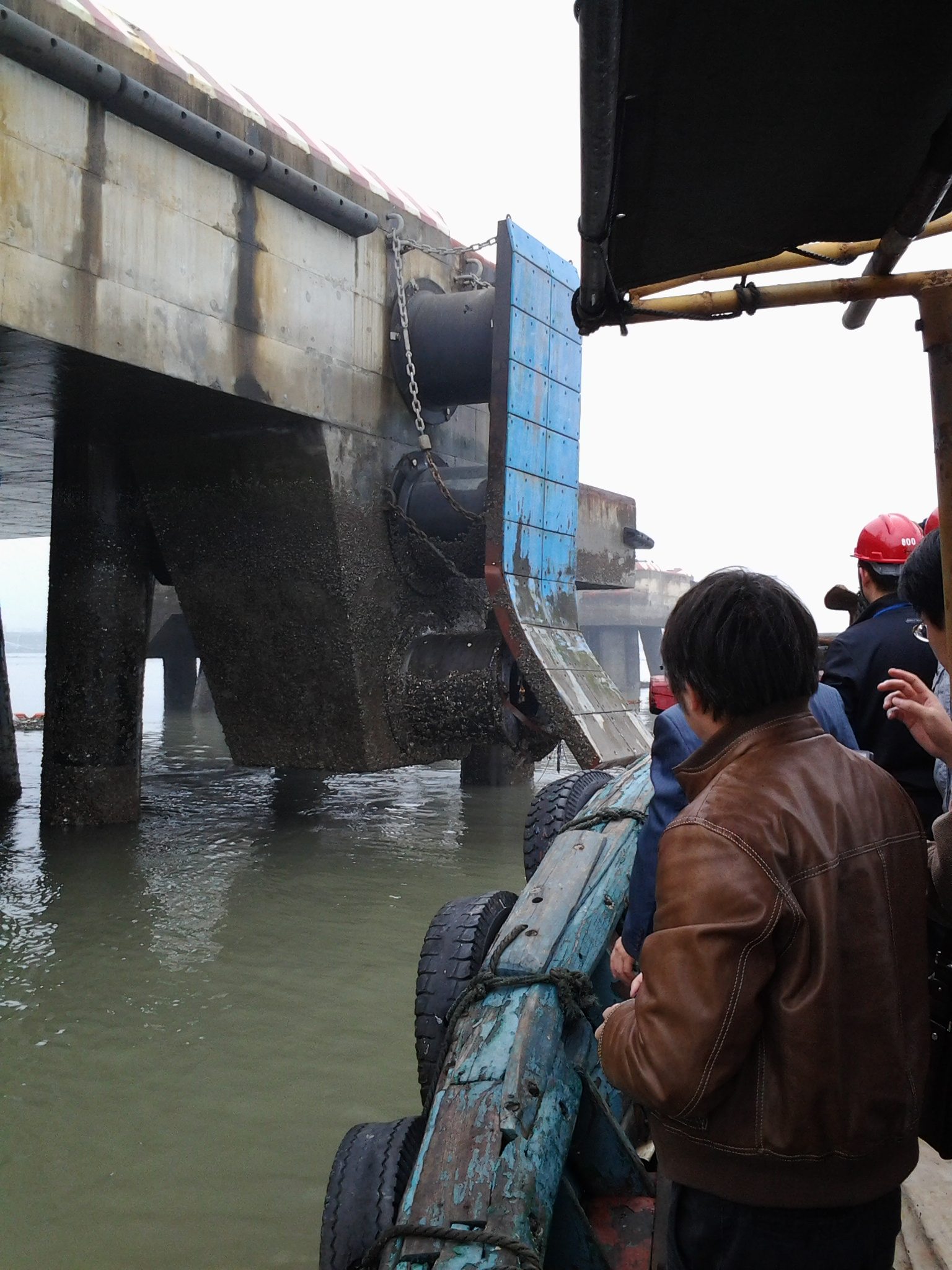
2.2 Damaged Frontal Panel
Frontal panels distribute berthing loads across the fender contact area. Nevertheless, corrosion, impact damage, loose connections, or structural deformation can affect their ability to transfer loads properly.
In addition, damaged facing materials may increase friction against the vessel hull and create further maintenance concerns.
3. Safety and Cost Risks of Fender Failure
A failed fender system affects more than the rubber unit itself. Depending on the berth and vessel conditions, the consequences may extend to port operations, vessel safety, and supporting infrastructure.
- Vessel damage: Insufficient protection can increase the risk of hull contact damage during berthing.
- Structural damage: Excessive reaction forces or failed connections may damage quay walls, concrete structures, and embedded components.
- Operational disruption: Emergency repairs and berth closures can delay vessel movements and cargo handling.
- Higher maintenance costs: Replacing an entire damaged assembly may cost more than carrying out timely inspections and planned maintenance.
- Personnel safety risks: Unexpected equipment failure can create hazards for workers and contractors operating near the berth.
Therefore, reliable fender performance should be treated as an essential part of port safety management rather than simply an equipment maintenance issue.
4. How to Prevent Marine Fender Failure
A practical prevention strategy combines proper engineering, reliable manufacturing, correct installation, and routine inspection. Each stage contributes to the long-term performance of the complete fender system.
4.1 Select the Right Fender System
The selection process should account for vessel displacement, berthing velocity, approach angle, tidal range, and available installation space. In addition, energy absorption, reaction force, hull pressure, and berth operating conditions require careful evaluation.
Depending on project requirements, suitable options include cone, cell, cylindrical, and other marine fender designs. Explore different marine rubber fender systems to compare available product categories.
4.2 Use Reliable Rubber Materials
High-quality rubber compounds help maintain elasticity and mechanical performance during repeated compression. Material selection should also account for environmental exposure and expected operating conditions.
Moreover, manufacturers should maintain appropriate quality control throughout rubber mixing, moulding, curing, and final inspection.
4.3 Check Frontal Panels and Accessories
Steel frontal panels, UHMW-PE facing pads, chains, bolts, and other accessories all contribute to system reliability. For this reason, the complete assembly should be checked rather than inspecting only the rubber body.
Corrosion protection and secure connections are particularly important in marine environments.
4.4 Ensure Correct Installation
Installation should follow approved engineering drawings and manufacturer instructions. Before commissioning, contractors should verify foundation strength, anchor bolt positions, alignment, and connection details.
4.5 Establish a Regular Inspection Schedule
Routine inspections allow maintenance teams to identify early signs of deterioration. The inspection schedule should reflect vessel traffic, operating conditions, environmental exposure, and manufacturer recommendations.
In addition, maintenance teams should record their findings and arrange repairs or replacement whenever necessary.
A practical marine fender inspection checklist includes:
- Check the rubber surface for cracks, cuts, hardening, and deformation.
- Inspect frontal panels for bending, corrosion, and impact damage.
- Examine anchor bolts, chains, brackets, and other fixing components.
- Look for loose connections and abnormal movement.
- Review the condition of UHMW-PE facing pads and contact surfaces.
- Record inspection findings and arrange repairs or replacement where required.
4.6 Follow Applicable Engineering Standards
Relevant technical standards provide guidance for fender design, testing, and performance evaluation. Depending on the project, engineers may refer to applicable PIANC guidance and relevant ISO standards.
For pneumatic rubber fenders, ISO 17357-1 provides requirements for high-pressure floating pneumatic rubber fenders. However, this standard should not be treated as a universal specification for every type of marine fender.
5. Choosing Reliable Marine Fender Components
Preventing premature failure starts with choosing suitable products and components for the project. A complete fender assembly may include rubber fenders, frontal panels, facing pads, chains, anchors, and fixing accessories.
Marine Fender Systems
Different fender designs provide different energy absorption and reaction force characteristics. Selecting the appropriate system helps improve berthing safety and protect port infrastructure.
Frontal Panels and Steel Structures
Properly designed steel panels and supporting structures help distribute berthing loads and provide a stable contact surface between the vessel and the fender system.
Explore Marine Products →6. Conclusion
Marine fender failure can result from poor materials, incorrect design, improper installation, or insufficient maintenance. These problems may compromise vessel protection, damage port structures, and interrupt terminal operations.
However, many failures can be reduced through proper engineering, reliable manufacturing, professional installation, and regular inspection. By addressing potential problems early, port operators can improve equipment reliability and reduce long-term maintenance costs.
Ultimately, a well-designed and properly maintained marine fender system is an important investment in safe and efficient port operations.
Need Reliable Marine Fender Solutions?
SME Marine provides marine fender systems and related components for port, terminal, and offshore applications. Contact our team to discuss your project requirements.
Contact SME Marine