Single Bitt Bollards
Designed for dependable mooring in demanding marine environments, SME Marine Single Bitt Bollards combine a compact structure with robust construction. Customized load capacities, dimensions, and surface protection help meet the specific requirements of ports, terminals, and waterfront projects.
Inquire Now
Practical Design. Reliable Mooring.
Single Bitt Bollards offer a practical solution for securing mooring lines in port and harbour environments. Their straightforward design supports convenient operation, while robust construction meets the demands of daily mooring service.
Compact Structure
The single-post design offers a space-efficient mooring point for suitable quay layouts and berthing arrangements.
Robust Construction
Manufactured to meet project specifications, the bollards provide dependable strength for routine mooring operations.
Project-Specific Options
Load capacity, dimensions, materials, and protective coatings can be specified according to project requirements.
Technical Documentation for Every Project
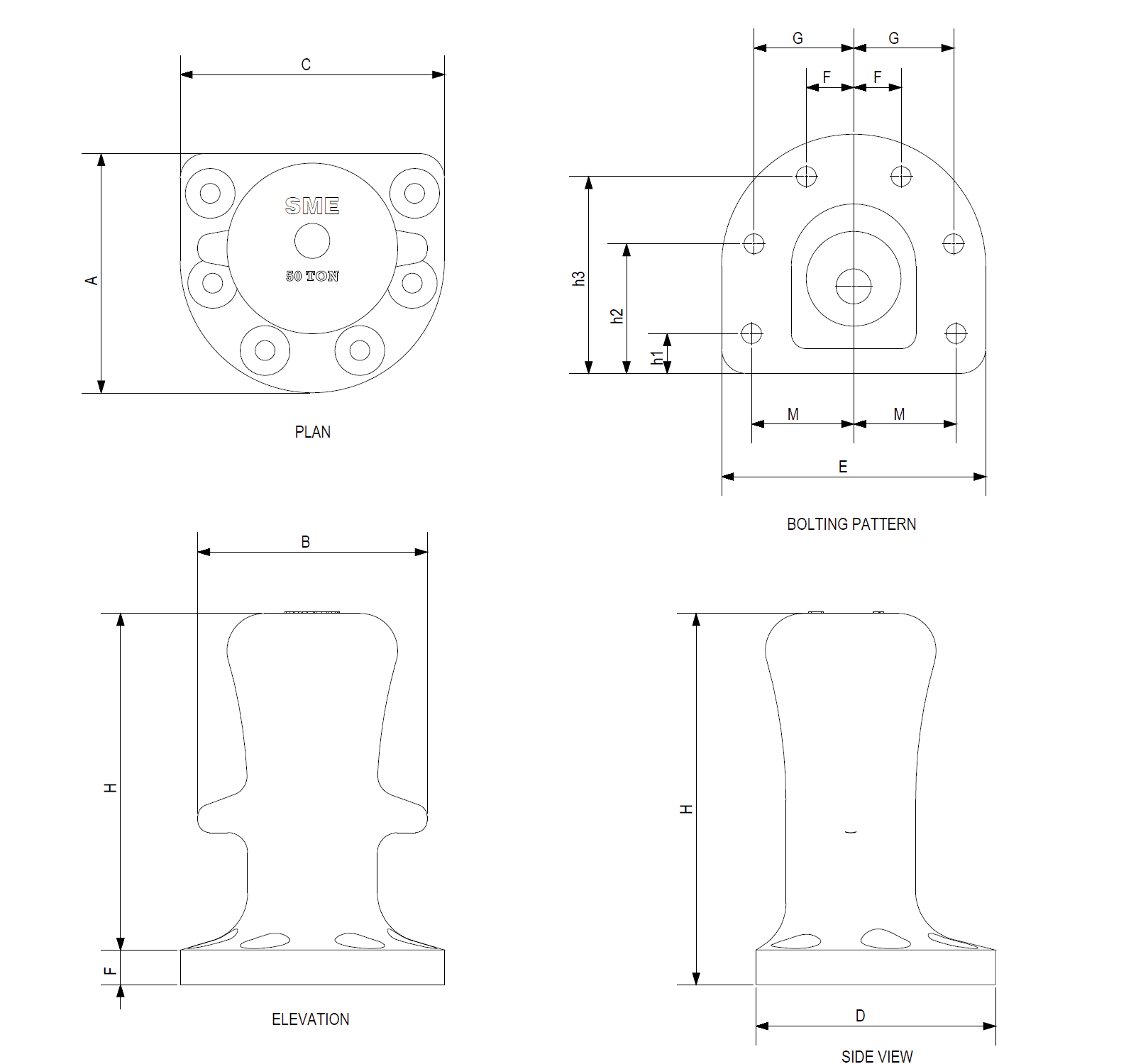
SME Marine provides project-specific technical documentation to support bollard selection, engineering review, and installation planning.
Depending on project requirements, submissions may include FEA (Finite Element Analysis) reports, engineering calculations, dimensional drawings, and installation guidance. These documents help clients and project engineers evaluate design performance and verify compliance with specified requirements.
Single Bitt Bollard Series Specifications
SME Marine manufactures single bitt bollards in a range of rated capacities to meet diverse vessel mooring and port infrastructure requirements. Our production range includes 50-ton, 80-ton, 100-ton, 125-ton, 150-ton, and 200-ton models, with specifications tailored to individual project needs.
Controlled Manufacturing. Verified Quality.
SME Marine manufactures ship mooring bollards through controlled processes, from material selection and casting to machining and surface protection.
We conduct quality inspections to verify dimensions, workmanship, and compliance with project specifications.

How to Inspect Ship Mooring Bollards?
How often should mooring bollards be inspected?
| Level | Scope | Interval |
|---|---|---|
| Level 1 – Routine | Visual check of body, welds, anchor bolts, coating, foundation | Annually |
| Level 2 – Detailed | Close-up inspection, thickness gauging, bolt torque re-check, NDT as needed | Every 4–6 years (3 years in corrosive areas) |
| Level 3 – Load test | Verified load test per approved procedure | ≈ Every 5 years, as required by the terminal |
Inspect immediately after storms, vessel impacts, or any overload event.
What is checked during an inspection?
Structure: body, welds and base for cracks or deformation (NDT if suspected).
Anchorage: bolts, nuts, base plate and concrete for looseness, corrosion or displacement.
Corrosion: coating condition and material loss; repair damage promptly.
Capacity: verify rated load (SWL/WLL) against design and operating requirements.
Is a load test required?
BS 6349-4 treats WLL verification as mandatory. Where a load test is performed, it should be done by qualified personnel per an approved procedure using calibrated equipment — typically 1.1–1.5 × SWL held for 5–10 minutes.
When should inspection frequency be increased?
For heavily used berths, harsh marine environments (especially the splash zone), poor maintenance history, or any equipment that has experienced overload or impact.
Which standards apply?
UFC 4-150-08 Inspection of Mooring Hardware, BS 6349-4 Design of Fendering and Mooring Systems, plus the manufacturer's maintenance manual and port authority requirements.
Why is regular inspection important?
Regular inspection and preventive maintenance extend bollard service life and ensure safe, reliable mooring operations — while keeping records essential for insurance and liability purposes.
Looking for the Right Single Bitt Bollard?
Share your required capacity, project specifications, drawings, and installation details. Our team can review your requirements and discuss a suitable bollard configuration.
Request a Quote